

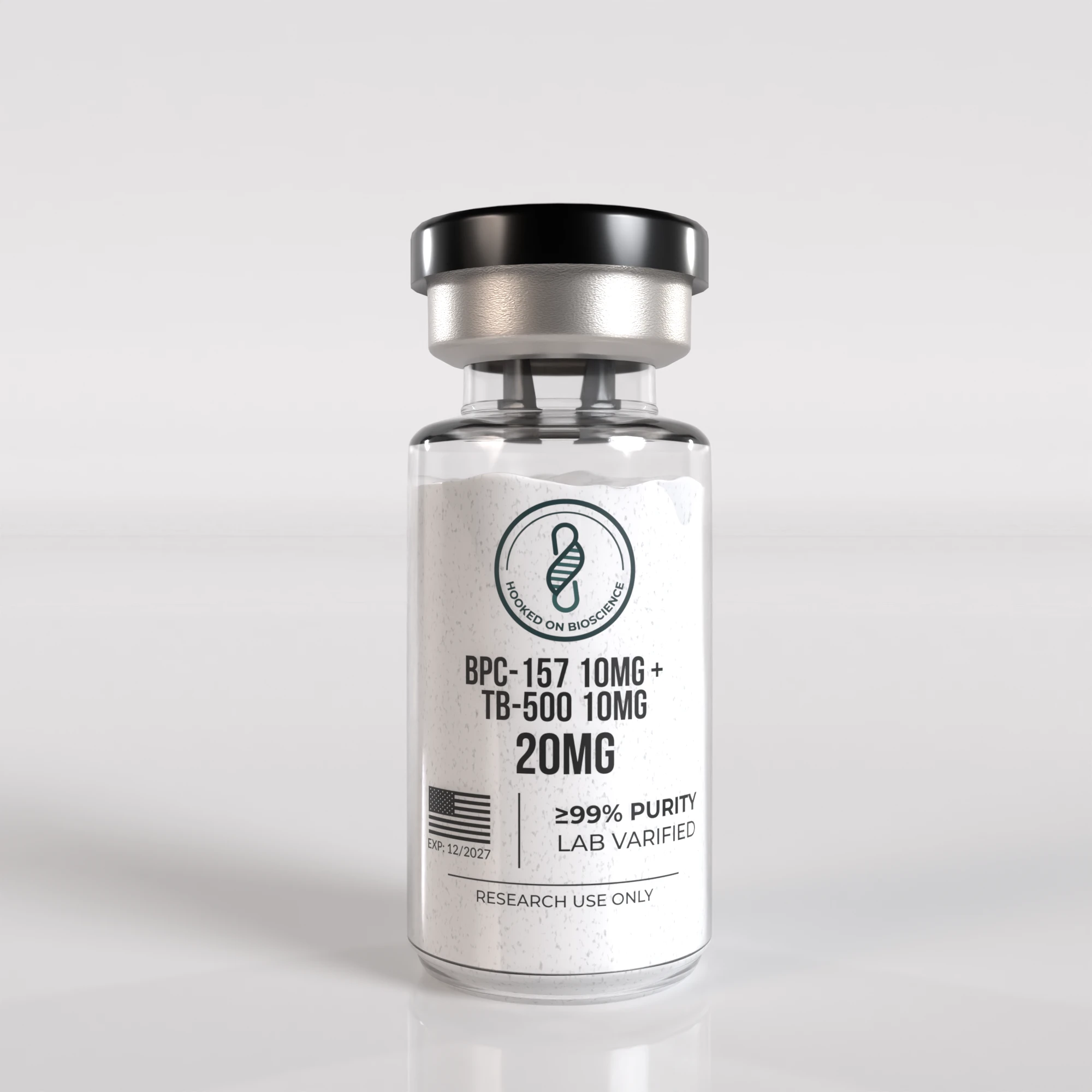
BPC-157 + TB-500 20MG
Research-use-only peptide for laboratory and investigational research settings.
A dual-peptide formulation designed for advanced research into regenerative signaling and peptide interaction pathways.
Overview:
BPC-157 + TB-500 20MG is a combined peptide research compound studied for its potential involvement in cellular repair mechanisms, angiogenesis, and tissue-regulating pathways. This formulation is utilized in controlled laboratory settings to explore synergistic peptide interactions and their role in complex biological responses.
Mechanism:
Research suggests that BPC-157 and TB-500 may influence multiple signaling pathways associated with cellular migration, vascular development, and extracellular matrix remodeling. BPC-157 has been examined for its interaction with growth factor pathways, while TB-500 (a thymosin beta-4 analog) is studied for its role in actin regulation and cellular movement. Together, they are investigated for complementary activity in coordinated biological processes.
Applications:
- Cellular repair and regeneration pathway research
- Angiogenesis and vascular signaling studies
- Peptide synergy and interaction models
- Extracellular matrix and tissue signaling research
For research use only. Not for human or animal consumption.
- Research-use-only inventory
- Batch documentation prioritized
- Ships from U.S.
$149.00
For laboratory research use only. Not for human or animal consumption.
Satisfaction Guaranteed
Secure
Payment
Third-party
Tested
Third Party Testing
Independently tested for purity and consistency.
Secure Checkout
Encrypted and secure payment processing.
Batch Transparency
COA and supporting records available where applicable.
Why researchers choose Hooked on Bio
Multi-target peptide under investigation in research settings.
Documentation-first product positioning for clearer purchasing.
Designed for laboratory-based purchasing environments and qualified buyers.
Access Batch Documentation & Lab Reports
We prioritize transparency by providing access to supporting documentation and COA records where available.
Research Use Only
All products are supplied strictly for laboratory and investigational research purposes.
✔ Not for human or animal consumption
✔ Not intended for diagnostic, therapeutic, or clinical use
✔ For use by qualified researchers and laboratory environments only
A dual-peptide formulation designed for advanced research into regenerative signaling and peptide interaction pathways.
Overview:
BPC-157 + TB-500 20MG is a combined peptide research compound studied for its potential involvement in cellular repair mechanisms, angiogenesis, and tissue-regulating pathways. This formulation is utilized in controlled laboratory settings to explore synergistic peptide interactions and their role in complex biological responses.
Mechanism:
Research suggests that BPC-157 and TB-500 may influence multiple signaling pathways associated with cellular migration, vascular development, and extracellular matrix remodeling. BPC-157 has been examined for its interaction with growth factor pathways, while TB-500 (a thymosin beta-4 analog) is studied for its role in actin regulation and cellular movement. Together, they are investigated for complementary activity in coordinated biological processes.
Applications:
- Cellular repair and regeneration pathway research
- Angiogenesis and vascular signaling studies
- Peptide synergy and interaction models
- Extracellular matrix and tissue signaling research
For research use only. Not for human or animal consumption.
Related Research Compounds
Related products
-
GLOW 70MG
$169.00 -
TB-500 10MG
$69.00 -
SS-31 50MG
$229.00 -
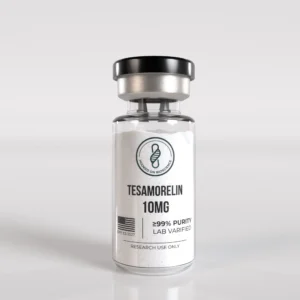
Tesamorelin 10MG
$149.00
Built for labs and qualified peptide research buyers.
Research-Use Inventory
Strictly for laboratory and research use.
Documentation First
COA and batch support where applicable.
Quality & Consistency Focused
Standards aligned with research environments.
For Researchers, By Researchers
Built to support serious research workflows.