
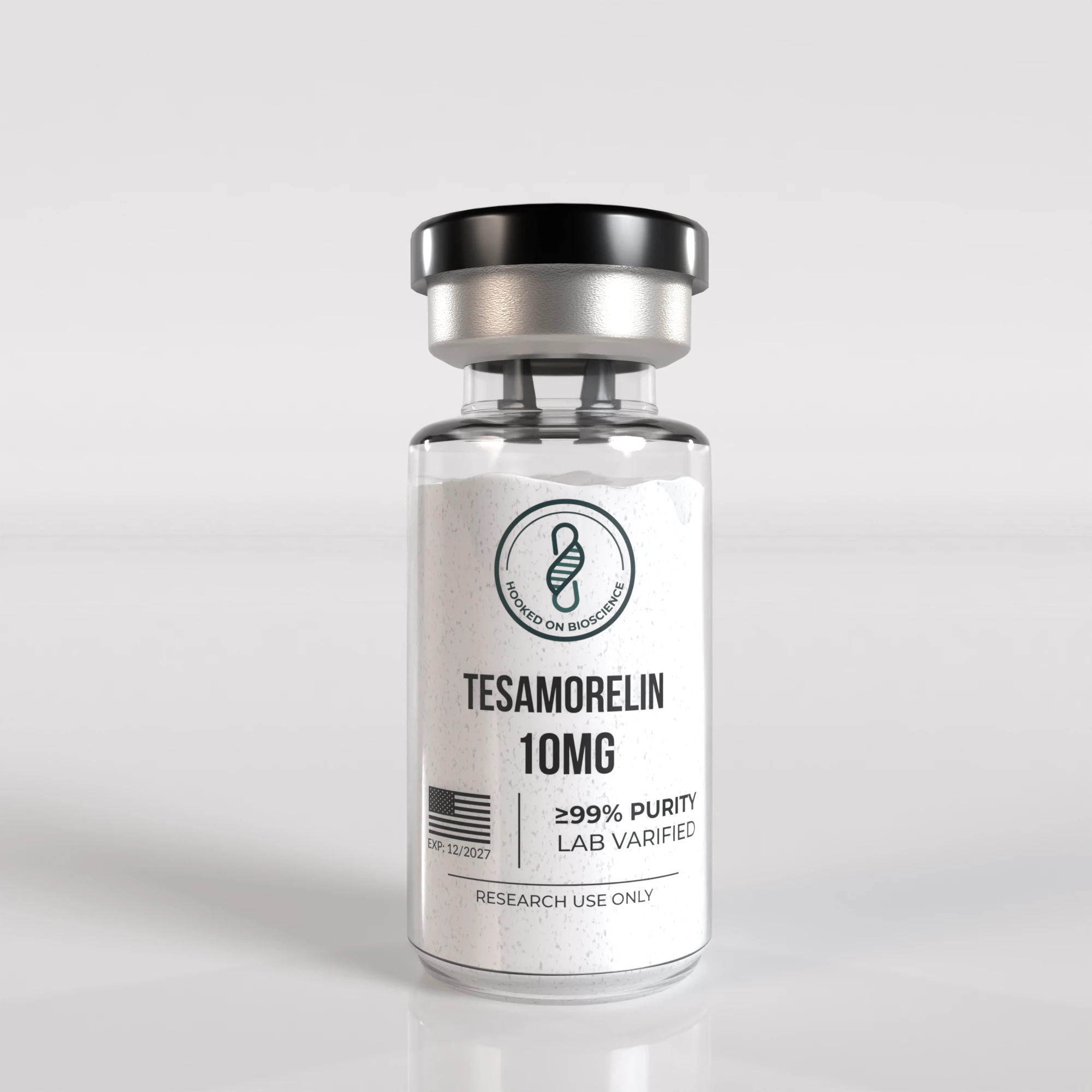
Tesamorelin 10MG
Tesamorelin is a synthetic decapeptide with a structural homology to the growth hormone-releasing hormone (GHRH) and the melanin-concentrating hormone (MCH). Below is a detailed overview of its scientific properties and research applications, intended solely for academic, industrial, or institutional research purposes.
Research Context
Tesamorelin has emerged as a valuable tool in pharmacological and biological research due to its selective activity on the GHRH receptor. Originally developed to study the regulation of growth hormone (GH) secretion, it has been investigated in various contexts such as the study of obesity, aging, metabolic syndrome, and muscle atrophy. Its distinct mechanism of action, which bypasses hypothalamic regulation, allows researchers to focus on downstream effects without the confounding influence of endogenous GH signaling.
Research Overview
Tesamorelin was first synthesized in the 1990s as a research compound to explore the mechanisms of GH regulation. Unlike conventional GHRH analogs, which act on the pituitary, tesamorelin directly stimulates the liver to produce GH independently of hypothalamic input. This feature has enabled investigations into the role of GH in muscle and fat metabolism, as well as its potential therapeutic implications in conditions involving disrupted lipid metabolism.
Key Research Focus Areas
- Metabolic Studies: Tesamorelin has been utilized in preclinical research to evaluate its effects on fat redistribution, particularly in models of obesity and sarcopenia. Its ability to selectively reduce visceral fat deposition without altering lean body mass has attracted significant interest.
- Muscle Atrophy Research: In aging and disease models, tesamorelin has been studied for its potential to mitigate muscle wasting associated with conditions such as diabetes, chronic inflammation, and immobilization.
- Growth Hormone Signaling Pathways: Research has examined the downstream effects of tesamorelin on IGF-1 (insulin-like growth factor-1) production, muscle protein synthesis, and overall anabolic responses. This has led to insights into the molecular mechanisms underlying GH resistance and compensatory growth strategies.
- Aging and Metabolic Syndrome: Due to its capacity to selectively enhance fat metabolism while sparing muscle integrity, tesamorelin has been explored in aging research, where metabolic dysregulation is a hallmark of aging-related pathologies.
This product is intended exclusively for research institutions, universities, or approved pharmaceutical companies conducting legitimate scientific inquiry. Users must adhere to all applicable local, national, and international laws governing research substances, including proper documentation, storage, and disposal protocols.
Important Compliance Notice
For research use only. Not for human or animal consumption. Trespassing with this product in a clinical or consumer setting may constitute a violation of research ethics and legal regulations. Always consult with your institution’s research oversight committee or regulatory authority before handling this material.


Reviews
There are no reviews yet.